
If you just got a 1099 form in the mail and you’re not sure what to do with it, stay tuned – I’m gonna explain exactly what’s going on!
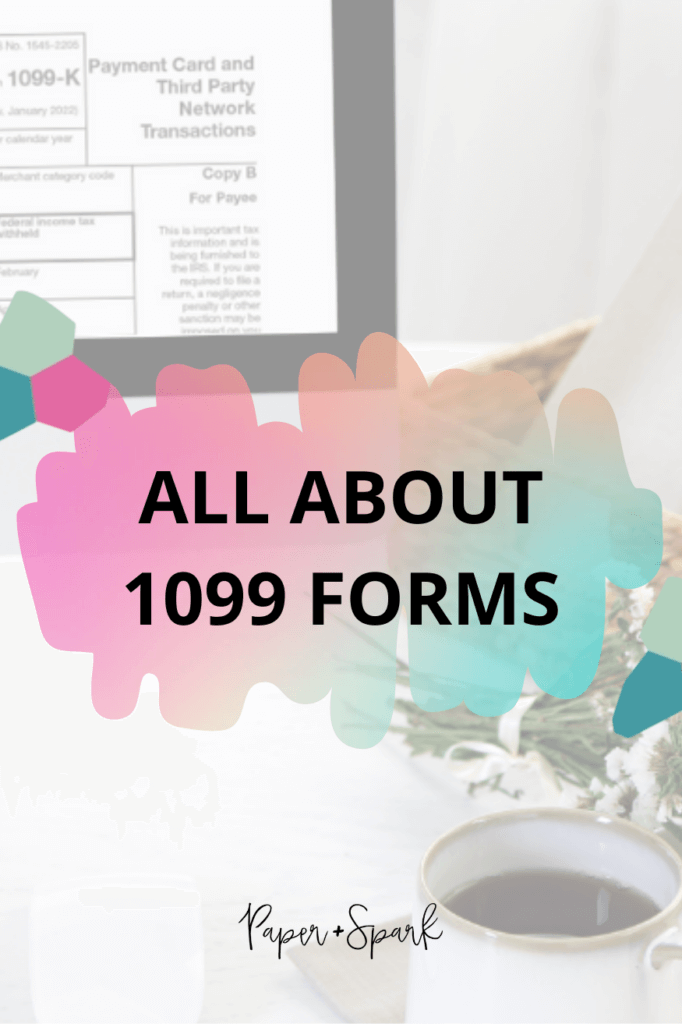
Let’s chat 1099 forms! You may have gotten this form in the mail or in your inbox recently. You may hear conflicting info about it because it seems the rules for who gets one has changed every year, for the past several years now!
You might’ve been hearing rumblings about the IRS changing some rules about who needs to receive a 1099 form this year.
I’ve seen frantic FB posts from people saying things like “now my eBay sales are reportable!” or “now my FB marketplace sales are taxable!” or “they’re taxing my PayPal stuff next year!” etc.
Real truth y’all – that stuff was always subject to tax. Let’s get to the facts behind this particular topic.
The rules regarding 1099s have recently changed, but before I dive into that – let me explain exactly just WHAT a 1099 form is.
There are different types of 1099 forms, and in this post I’m explaining the 1099K form specifically.
A 1099K is an informational form that third party payment processors are required to send to you if you received payments from them from processing payments on your behalf.
These are payment processors like Etsy, PayPal, Stripe, Shopify, Amazon, etc. All of these e-commerce platforms are payment processors accepting & processing payment on your behalf, then sending that payment over to you.
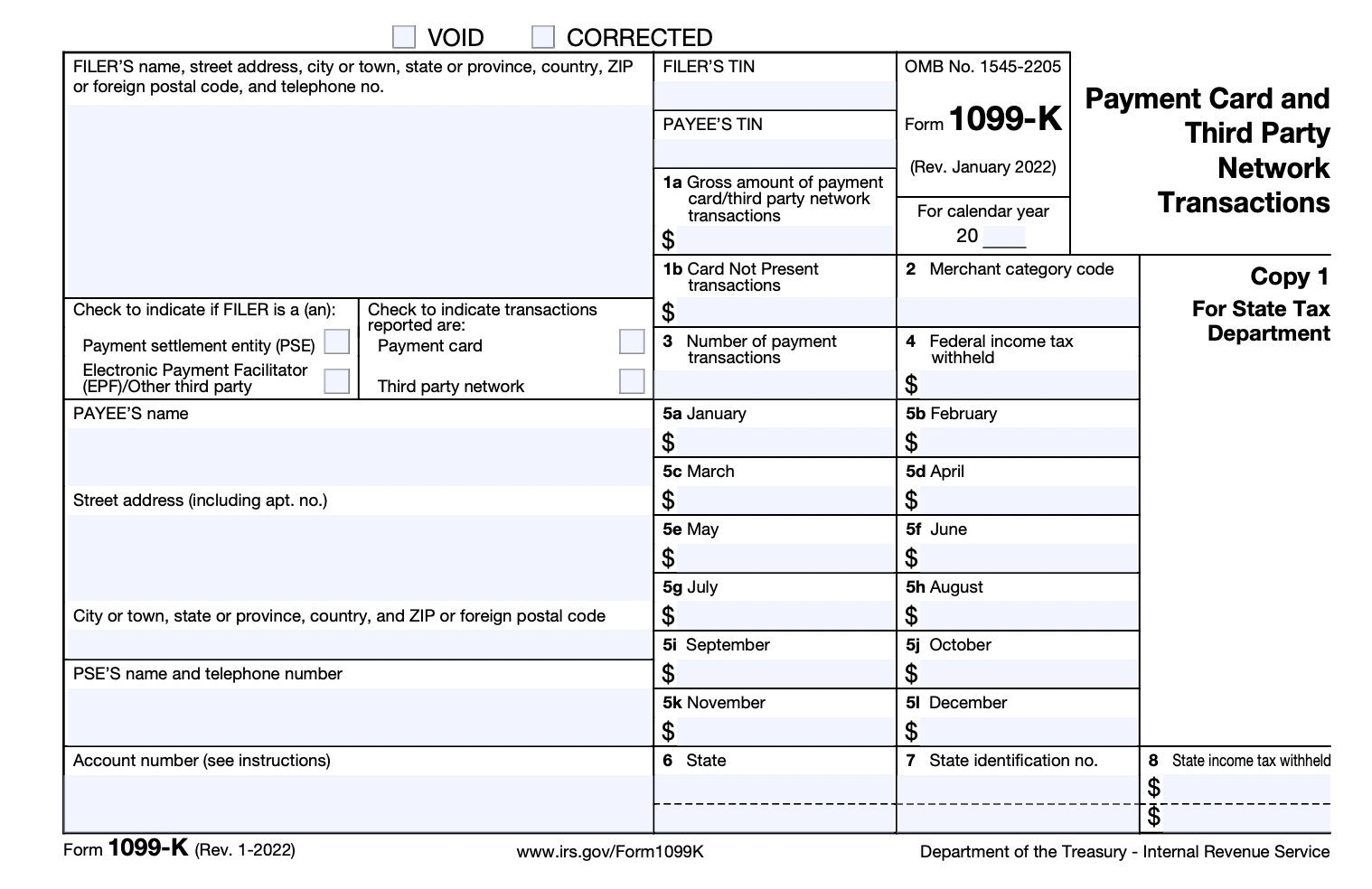
Read about 1099K forms directly from the IRS website here.
WHAT GOES ON A 1099K FORM?
The payment processor reports how much gross revenue (that means TOTAL sales before any fees are subtracted out) they processed on your behalf on this form. That’s literally all that’s on it – your total sales on that platform.
The payment processor ALSO sends a copy of your 1099K to the IRS. Like I said – it’s an informational form. It’s giving a heads’ up to the IRS (internal revenue service) that you (or really your business) should be reporting at least that much in revenue on your tax form somewhere.
So basically – It’s NOT a form that says, “hey now your stuff is subject to tax”. Instead, it’s just a form that says “Janet made $15,000 on Etsy this year. IRS – be on the lookout for Janet to report at least $15k on her taxes.”
So that’s all this form really is – your total sales from that platform. One for you, one for the IRS.
WHO RECEIVES A 1099K FORM?
Well that depends what year we’re talking about! A little history lesson — in the early 2020s, the powers-that-be over at the IRS started thinking that too many of us were underreporting our revenue. A lot of people were under the (incorrect) assumption that if you didn’t receive a 1099K, you didn’t need to report that revenue…like at all.
So the IRS said, you know what? Let’s send MORE PEOPLE a 1099K in January, so that everybody knows they need to report this stuff, and we can make sure we get ALL the taxes we’re supposed to get!
in 2022, the IRS announced they were lowering the 1099K threshold from the previous $20,000 in gross revenue all the way down to $600. That’s a very dramatic reduction!
But then for several years, they had trouble actually doing that. Due to staff shortages and what not, they made a lot of last minute announcements each year back-pedaling. Suffice to say, they delayed the reduction for a couple years and then made it down to $5k for 2024, with the goal to be $600 in 2025.
Fast forward to the summer of 2025 with the passing of the Big Beautiful Bill, and now we are back at the original threshold of $20,000 in gross revenue.
All these changes and conflicts mean I’m confused, you’re confused, your payment processor is confused, even the IRS website is confused.
→ But here’s the bottom line, whether or not you receive a 1099K from your payment processor matters not. You still need to be prepared to report all your shop’s revenue, regardless of how much or how little you made.
Also I will note — it’s totally possible to receive a 1099K even with gross sales under the current threshold. One reason being that some states already have adopted the $600 threshold. If you receive one and didn’t hit the threshold, that’s not a big deal! Keep reading.
SO WHAT DO I ACTUALLY NEED TO DO, JANET?
The end goal to be compliant is to make sure the money reported on any 1099Ks you receive is included in your gross revenue on your taxes.
Most of us are probably filling out a Schedule C form for taxes (or should be) – this is where you report your business sales and expenses if you’re a sole proprietor or a single member LLC.
If you need to learn more about the Schedule C, this is a great place to start.
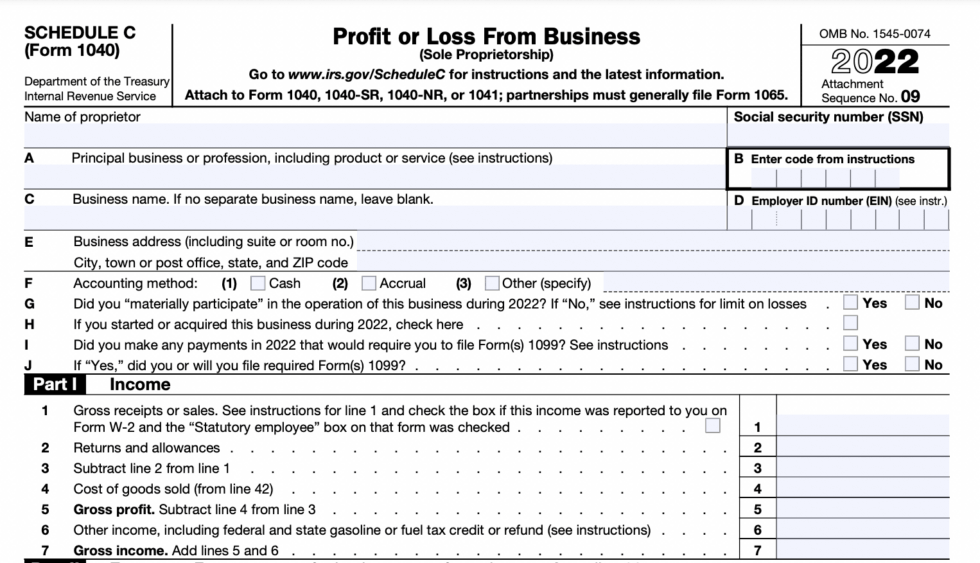
If you look at Line 1 of the Schedule C, this is where you report your gross revenue. Assuming your 1099Ks are all related to your business, the amount here should be equal to or greater than the sum of all the 1099Ks you receive this year. If this amount is LESS than your 1099Ks, that will be a red flag to the IRS that you aren’t reporting all of your revenue.
Now don’t be alarmed – this is you reporting your GROSS sales. That’s not what you pay taxes on. You still get to reduce your revenue by your business deductions or expenses to calculate your NET profit, which is the number that really matters when it comes to paying taxes!
KEEP UP WITH YOUR BOOKS
It’s important to make sure you are still recording your sales & expense transactions in a bookkeeping system. Don’t think that just because these platforms are sending you 1099K tax forms at year end that doesn’t mean you don’t have to keep track of your numbers yourself.
First – remember the 1099Ks will not include any of the fees or expenses you pay over to that platform all year. You need to be tracking those yourself so you know how much to deduct at year end. Those are things like shipping labels, sales tax paid, processing fees, advertising fees, transaction fees, etc.
Second – you want to make sure you’re recording your sales in your bookkeeping system so you can reconcile or MATCH to the 1099Ks you receive. 1099Ks aren’t always correct! There have been many instances where platforms send out inaccurate 1099Ks and they need to amend. The only way you’ll know is if you’re keeping track of your own books.
NEED HELP WITH THIS?
If you weren’t prepared to report those sales or file taxes for your online shop, now is the time to get to speed on those requirements. Receiving a 1099K for the first time will likely mean a lot of sellers are scrambling to figure out their bigger tax picture for the first time, to make sure they’re doing things properly.
I’ve got several resources to help you get settled!
💻 Bookkeeping templates to help you track your sales and expenses
💰 A free workshop all about your tax responsibilities as an online seller
📖 The Bite-Sized Bookkeeping Bootcamp course if you need step-by-step help getting caught up on your books & ready for the tax deadline (this course is seasonal and only available December through February each year)
Interested in learning more about your financial responsibilities as a maker? Check out my free workshop below and get your learning on!